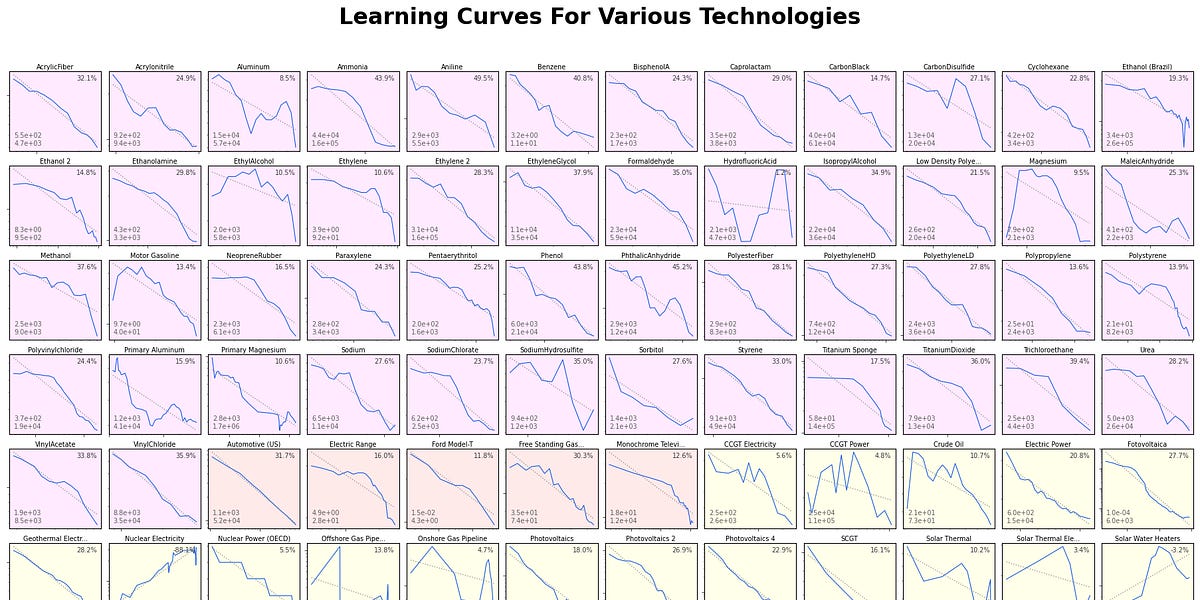
A research paper examines how technology learning curves vary over time, challenging the traditional constant learning rate model. via construction-physics.com
A research paper examines how technology learning curves vary over time, challenging the traditional constant learning rate model. via construction-physics.com
I run six Claude Code agents in parallel from my phone. No laptop, no desktop
Mobile development setup that runs Claude Code agents in parallel from a phone using a cloud VM, Termius, and push notifications for async coding.
Then, as restaurants started to publicly decry the hefty commissions these apps collected, some diners rebelled. This was the “delete your apps” era. We did not delete our apps. In fact, we’re more hooked now. Data from the National Restaurant Association suggests demand for restaurant delivery is growing.
Expedite article analyzing **that** viral Reddit post about food delivery app algorithms.
The first price point for usable solar technology that I can find is from the year 1956. At that time, the cost of just one watt of solar photovoltaic capacity was $1,865 (adjusted for inflation and in 2019 prices).10 One watt isn’t much. Today, one single solar panel of the type homeowners put on their roofs produces around 320 watts of power.11 This means that at the price of 1956, one of today’s solar modules would cost $596,800.12
Our World In Data explaining why renewable energy prices have dropped dramatically, showing how solar and wind technologies have become cheaper than fossil fuels within just 15 years.
Dividing 1 by 998,001 generates a sequence of three-digit numbers (000-999), with 998 being the only exception. via x.com
Stay up to date with email notifications of new posts.