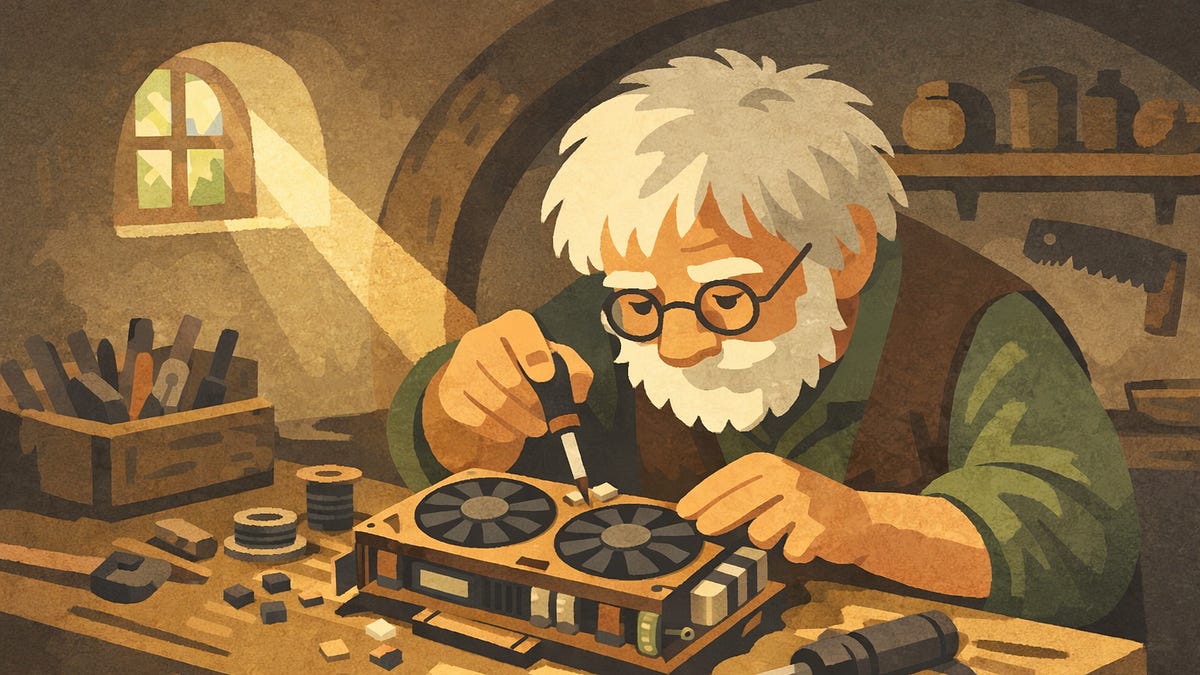
The magic of this mysterious technology is starting to lose its luster. What looked like magic is turning into work.
The current state of personal AI infrastructure. via ondiscourse.substack.com
The magic of this mysterious technology is starting to lose its luster. What looked like magic is turning into work.
The current state of personal AI infrastructure. via ondiscourse.substack.com
Everything posted this week — 2 links.
As Iggy keeps talking about simple pleasures, Bourdain’s adam’s apple jumps. His eyes dart around as he asks his hero, “You’re the template for the rockstar. Other rock stars look to you to figure out ‘How should I behave?’ [...] Given that, what thrills you?”
Iggy smiles. “The nicest stuff right now, it’s really embarrassing,” he says, completely serene yet almost sheepish. “It’s being loved and actually appreciating the people that are giving that to me.”
Cailey Rizzo on meeting her hero.
If you prefer to source your own electrolytes instead buying LMNT, jot this down and grab a kitchen scale:
2,500 mg sodium chloride (for 1,000 mg sodium)
385 mg potassium chloride (for 200 mg potassium)
390 mg magnesium malate OR 265 mg di-magnesium malate (for 60 mg magnesium)
LMNT shares recipes for four flavors of their electrolytes.
If you prefer to source your own electrolytes instead buying LMNT, jot this down and grab a kitchen scale:
2,500 mg sodium chloride (for 1,000 mg sodium)
385 mg potassium chloride (for 200 mg potassium)
390 mg magnesium malate OR 265 mg di-magnesium malate (for 60 mg magnesium)
LMNT shares recipes for four flavors of their electrolytes.
As Iggy keeps talking about simple pleasures, Bourdain’s adam’s apple jumps. His eyes dart around as he asks his hero, “You’re the template for the rockstar. Other rock stars look to you to figure out ‘How should I behave?’ [...] Given that, what thrills you?”
Iggy smiles. “The nicest stuff right now, it’s really embarrassing,” he says, completely serene yet almost sheepish. “It’s being loved and actually appreciating the people that are giving that to me.”
Cailey Rizzo on meeting her hero.
Everything posted this week — 3 links.
Nearly all people in history existed with some integration with their neighbours and knowledge of the broader world. It’s shocking to learn of a group that lived on their own for 50,000 years, and sealed off from everyone else for the last 10,000, nearly completely divergent from the rest of humanity.
An overview of the book First Contact which documents 1930s discovery of one million isolated highland Papua New Guineans. Definitely reading this book.
The issue has even risen to the level of MAGA World. Last July, Donald Trump’s Transportation Secretary, Sean Duffy, sent a letter to Congress outlining the administration’s policy priorities for the upcoming surface transportation reauthorization bill. Tucked in the letter was a new concept called “the Freedom Car,” which Duffy described as Americans’ right to “drive disconnected and non-automated” vehicles. The proposal would ban the government from requiring that vehicles be equipped with automated driving systems or have the capability to transmit data wirelessly — which, to my knowledge, no one is trying to do.
Andrew J. Hawkins on automakers collecting and selling driver data.
BirdNET-Go listens on a mic and handles the classifier. Fugleramme polls its api, matches each species to an illustration, then packs them onto a page, and redraws only when the birds change
Fugleramme displays real-time detected birds on e-ink using 1800s illustrations.
AI Newsletter — A curated weekly digest of AI links, with pull quotes and commentary.
$50/month $500/year (save 17%)
Weekly Roundup — Get a curated digest of the best links, ideas, and insights delivered to your inbox every week.
Subscribe to Newsletter — Stay up to date with email notifications of new posts.

Discussion